
House of BorhanABOUT HIM

BORHAN

BEHIND THEHOUSE

YOU

01Summer of 1983DISTINCT
Borhan standing in a double-breasted suit
Summer of 1983

Before the House

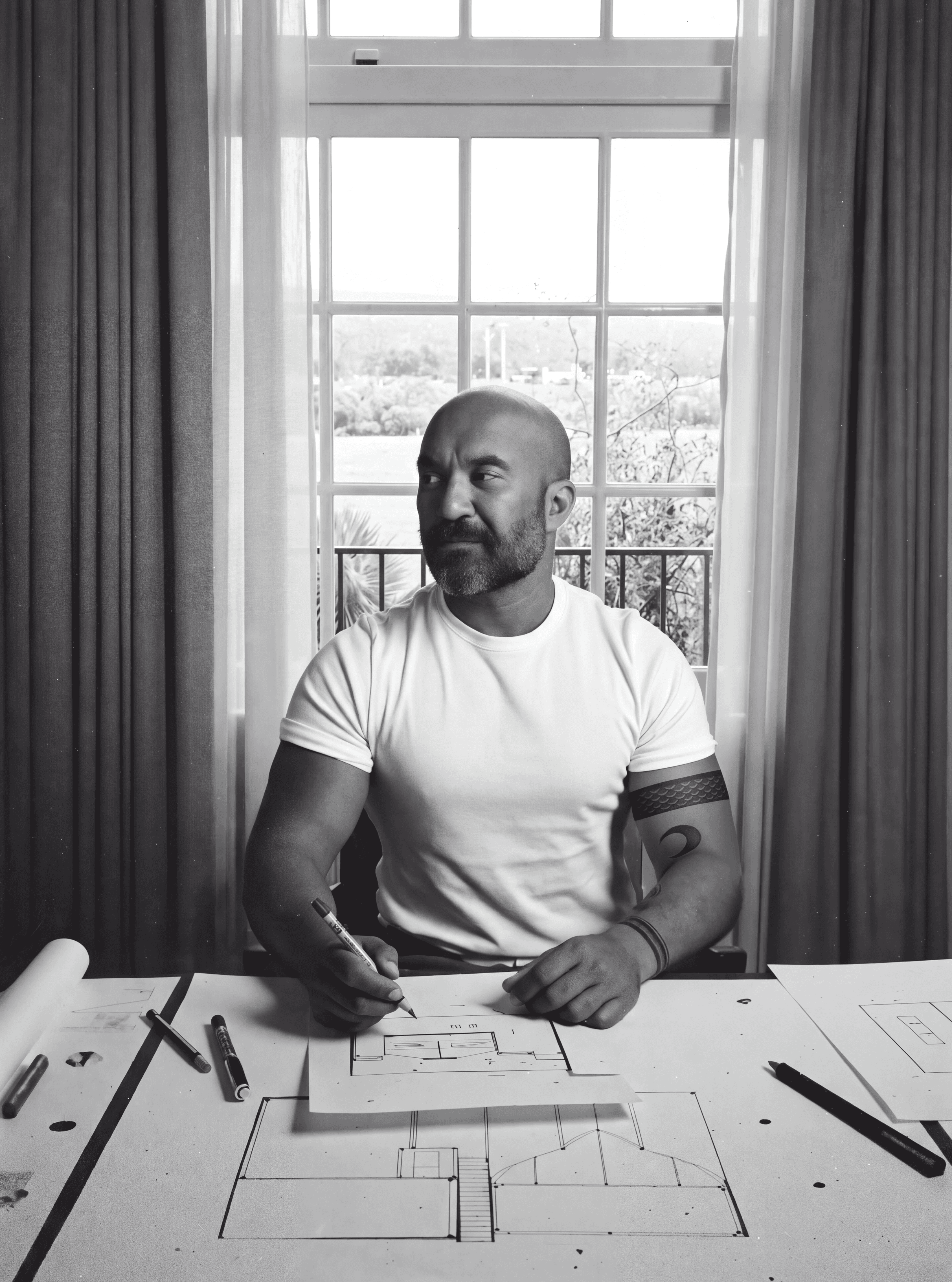
Borhan is an architect. This explains rather less than one might hope.

There is a romantic sensibility behind the exacting eye: a love of poetry, colour, embellishment and the possibility that something beautiful might hold a meaning it does not immediately disclose. Of Persian heritage, he feels a deep affinity with a culture in which architecture, gardens, literature and spiritual life have so often entered into conversation.

The poetry of Hafez and Rumi, the intricacy of ornament, the relationship between an inward life and its outward expression: these belong to the world of ideas and sensations to which he returns. They inform what he asks of beauty, and how long he is willing to look.

He is drawn to refinement with something unexpected within it. A composed room may become more interesting through an unfamiliar object; a certain richness may acquire its character through restraint. He enjoys the moment when an initial impression proves insufficient, when there is more to discover than the eye first understood.

This appetite for meaning carries into his work. A house offers shelter, certainly, but it also gives physical expression to a private world. What someone treasures, conceals, welcomes or longs for may find a place within it.

02BEAUTY MUST HAVE A REASONSOCRATIC
Woman in a dark evening dress standing in a garden
CHAPTER TWO

Beauty Must Have A Reason

His mother, Gita, taught him to look with purpose.

An iconic makeup artist, she worked with the particular character of a face. Borhan remembers the reasoning behind her decisions: why a line belonged where it did, what deserved emphasis, how an adjustment could bring the whole into balance.

What stayed with him was her insistence on intention. A gesture needed a reason. The person in front of her required attention. Beauty depended on the honesty of that encounter.

He carries that lesson into a different scale of work. A room presents its own questions of proportion, emphasis and character. An appealing gesture still needs to justify its presence. He wants to know what it contributes, what it reveals and whether it belongs to the person for whom it is being made.

There is affection in this inheritance, but also discipline. His mother gave him an enduring question to ask of his own decisions: why? It remains useful precisely when an idea is attractive enough to escape examination.

From her, he learned to associate beauty with reasoning, honesty and purity of intention. Looking closely was the beginning. Knowing why one intervened was the responsibility.

03THE WORK IS AN OFFERINGDEVOTED
Black-and-white portrait of a woman
CHAPTER THREE

The Work Is An Offering

His grandmother taught him another kind of attention: the effort owed to someone who has placed their trust in you.

Her example joined hard work with ethics and service. For Borhan, that inheritance lives in the willingness to remain attentive when the work becomes demanding, to follow through, and to give a person’s concerns the seriousness they deserve.

His Bahá’í faith gives this understanding a spiritual dimension. He approaches work undertaken in a spirit of service as worship. It connects the inner life with outward conduct.

He is particularly moved by the idea that things should be helped towards their fullest excellence. Timber, stone, concrete, human skill and effort are being committed to making something. He wants the result to be worthy of that commitment.

This is a demanding belief to hold. Excellence must serve someone; devotion must become useful.

For Borhan, the spiritual life enters the commission through such obligations. It is present in the patience to understand, the honesty to explain a difficulty, and the effort required to carry an intention through. These are ordinary acts. He takes their meaning seriously.

04WHAT HE CANNOT OVERLOOKBOLD
Man in a light suit and hat seated in a timber-panelled room
CHAPTER FOUR

What He Cannot Overlook

More than twenty years of work have sharpened his eye. They have also changed what he looks for.

His experience has included work for royal families, public figures and distinguished brands, alongside private residential clients. His work has received multiple awards. Yet the experience he returns to most often is the encounter with a person whose understanding of home is still taking shape.

A request may seem straightforward until someone explains why it matters. A preference may conceal a tension worth exploring. He listens, offers an interpretation and pays attention to whether the person recognises themselves in it. Understanding develops through that exchange.

He sees a failure in measures of architectural success that give insufficient weight to the life within the building. The photograph can establish the composition. It cannot establish whether someone feels at ease there.

He must be willing to question an impressive solution, return to a conversation or reconsider an assumption. The person commissioning the home should be able to recognise their life within the decisions being made. His dissatisfaction begins wherever that responsibility is treated as incidental.

05ACROSS THE TABLEPERCEPTIVE
Black-and-white portrait of Borhan seated with his hand beneath his chin
CHAPTER FIVE

Across The Table

The rarer part of Borhan’s work is the attention he gives the person who will live there. Most people who come to him are accustomed to being attended to; being understood is another matter.

He listens for the life that escapes the brief: the sentence abandoned halfway, the habit dismissed as unimportant, the contradiction others hurry to resolve. He notices what gives you ease, what unsettles you, and where a passing remark deserves another question.

This attention is warm, but not passive. He will question, edit and, when necessary, disagree.

An appointment begins with a conversation in both directions. Borhan wants to understand what you hope for; you should have the opportunity to question how he works. The relationship asks for candour, curiosity and the freedom to disagree.

The means to commission a home make the undertaking possible. They do not, on their own, establish the relationship.

Neither person should need to persuade the other into a partnership that does not feel right.

The recognition must be mutual.

06WHAT HE HOPES TO LEAVECOURTEOUS
Figure standing in a sunlit meadow
CHAPTER SIX

What He Hopes To Leave

Once a home is lived in, it becomes part of someone’s life in ways no designer could script. Objects move. Habits change. The people living there make discoveries of their own. Borhan hopes to create homes generous enough to accommodate that authorship.

His ambition is for the care invested in a commission to remain useful long after its individual decisions have ceased to attract attention. Someone may no longer notice why a place feels comfortable. They simply find that it does. The thinking has become part of their ease.

There should also be room for pleasure, surprise and attachment: for something to catch the eye again after years of familiarity, or become precious through an association no one could have planned.

This is what he hopes his work leaves behind: an enduring capacity to support a life as it unfolds. Its fullest meaning will emerge through the people who live there.

There is a necessary humility in that prospect. The home will know chapters of their lives that he will never see, and he wants to have prepared it well.

House of Borhan
House of BorhanABOUT HIM

BORHAN

BEHIND THEHOUSE

YOU

01Summer of 1983DISTINCT
Borhan standing in a double-breasted suit
Summer of 1983

Before the House

Borhan is an architect. This explains rather less than one might hope.

There is a romantic sensibility behind the exacting eye: a love of poetry, colour, embellishment and the possibility that something beautiful might hold a meaning it does not immediately disclose. Of Persian heritage, he feels a deep affinity with a culture in which architecture, gardens, literature and spiritual life have so often entered into conversation.

The poetry of Hafez and Rumi, the intricacy of ornament, the relationship between an inward life and its outward expression: these belong to the world of ideas and sensations to which he returns. They inform what he asks of beauty, and how long he is willing to look.

He is drawn to refinement with something unexpected within it. A composed room may become more interesting through an unfamiliar object; a certain richness may acquire its character through restraint. He enjoys the moment when an initial impression proves insufficient, when there is more to discover than the eye first understood.

This appetite for meaning carries into his work. A house offers shelter, certainly, but it also gives physical expression to a private world. What someone treasures, conceals, welcomes or longs for may find a place within it.

02BEAUTY MUST HAVE A REASONSOCRATIC
Woman in a dark evening dress standing in a garden
CHAPTER TWO

Beauty Must Have A Reason

His mother, Gita, taught him to look with purpose.

An iconic makeup artist, she worked with the particular character of a face. Borhan remembers the reasoning behind her decisions: why a line belonged where it did, what deserved emphasis, how an adjustment could bring the whole into balance.

What stayed with him was her insistence on intention. A gesture needed a reason. The person in front of her required attention. Beauty depended on the honesty of that encounter.

He carries that lesson into a different scale of work. A room presents its own questions of proportion, emphasis and character. An appealing gesture still needs to justify its presence. He wants to know what it contributes, what it reveals and whether it belongs to the person for whom it is being made.

There is affection in this inheritance, but also discipline. His mother gave him an enduring question to ask of his own decisions: why? It remains useful precisely when an idea is attractive enough to escape examination.

From her, he learned to associate beauty with reasoning, honesty and purity of intention. Looking closely was the beginning. Knowing why one intervened was the responsibility.

03THE WORK IS AN OFFERINGDEVOTED
Black-and-white portrait of a woman
CHAPTER THREE

The Work Is An Offering

His grandmother taught him another kind of attention: the effort owed to someone who has placed their trust in you.

Her example joined hard work with ethics and service. For Borhan, that inheritance lives in the willingness to remain attentive when the work becomes demanding, to follow through, and to give a person’s concerns the seriousness they deserve.

His Bahá’í faith gives this understanding a spiritual dimension. He approaches work undertaken in a spirit of service as worship. It connects the inner life with outward conduct.

He is particularly moved by the idea that things should be helped towards their fullest excellence. Timber, stone, concrete, human skill and effort are being committed to making something. He wants the result to be worthy of that commitment.

This is a demanding belief to hold. Excellence must serve someone; devotion must become useful.

For Borhan, the spiritual life enters the commission through such obligations. It is present in the patience to understand, the honesty to explain a difficulty, and the effort required to carry an intention through. These are ordinary acts. He takes their meaning seriously.

04WHAT HE CANNOT OVERLOOKBOLD
Man in a light suit and hat seated in a timber-panelled room
CHAPTER FOUR

What He Cannot Overlook

More than twenty years of work have sharpened his eye. They have also changed what he looks for.

His experience has included work for royal families, public figures and distinguished brands, alongside private residential clients. His work has received multiple awards. Yet the experience he returns to most often is the encounter with a person whose understanding of home is still taking shape.

A request may seem straightforward until someone explains why it matters. A preference may conceal a tension worth exploring. He listens, offers an interpretation and pays attention to whether the person recognises themselves in it. Understanding develops through that exchange.

He sees a failure in measures of architectural success that give insufficient weight to the life within the building. The photograph can establish the composition. It cannot establish whether someone feels at ease there.

He must be willing to question an impressive solution, return to a conversation or reconsider an assumption. The person commissioning the home should be able to recognise their life within the decisions being made. His dissatisfaction begins wherever that responsibility is treated as incidental.

05ACROSS THE TABLEPERCEPTIVE
Black-and-white portrait of Borhan seated with his hand beneath his chin
CHAPTER FIVE

Across The Table

The rarer part of Borhan’s work is the attention he gives the person who will live there. Most people who come to him are accustomed to being attended to; being understood is another matter.

He listens for the life that escapes the brief: the sentence abandoned halfway, the habit dismissed as unimportant, the contradiction others hurry to resolve. He notices what gives you ease, what unsettles you, and where a passing remark deserves another question.

This attention is warm, but not passive. He will question, edit and, when necessary, disagree.

An appointment begins with a conversation in both directions. Borhan wants to understand what you hope for; you should have the opportunity to question how he works. The relationship asks for candour, curiosity and the freedom to disagree.

The means to commission a home make the undertaking possible. They do not, on their own, establish the relationship.

Neither person should need to persuade the other into a partnership that does not feel right.

The recognition must be mutual.

06WHAT HE HOPES TO LEAVECOURTEOUS
Figure standing in a sunlit meadow
CHAPTER SIX

What He Hopes To Leave

Once a home is lived in, it becomes part of someone’s life in ways no designer could script. Objects move. Habits change. The people living there make discoveries of their own. Borhan hopes to create homes generous enough to accommodate that authorship.

His ambition is for the care invested in a commission to remain useful long after its individual decisions have ceased to attract attention. Someone may no longer notice why a place feels comfortable. They simply find that it does. The thinking has become part of their ease.

There should also be room for pleasure, surprise and attachment: for something to catch the eye again after years of familiarity, or become precious through an association no one could have planned.

This is what he hopes his work leaves behind: an enduring capacity to support a life as it unfolds. Its fullest meaning will emerge through the people who live there.

There is a necessary humility in that prospect. The home will know chapters of their lives that he will never see, and he wants to have prepared it well.

House of Borhan